
Quick summary:
- Reliable septic repair in Olympia depends on catching warning signs early, including backups, odors, and soggy drainfield areas.
- Regular septic service in Olympia WA, including pumping and inspection, reduces the risk of repeated repairs.
- Local providers such as EnviroTech Septic Solutions offer pumping, cleaning, repairs, and inspections for homes and businesses in the area.
Septic repairs hold up longest when they are paired with routine maintenance rather than treated as a one-time fix. Homeowners searching for a dependable answer to system failures need a provider who diagnoses the actual cause, not just the symptom sitting closest to the surface.
Olympia’s soil conditions, rainfall patterns, and older housing stock all place extra demand on septic infrastructure. Scheduling consistent septic service in Olympia WA helps catch small problems, like a slow drain or minor odor, before they turn into a collapsed drainfield or a backed-up main line. Waiting until a system fails completely almost always costs more than addressing warning signs early.
Recognizing When Repairs Are Needed
Septic systems rarely fail without warning. According to the EPA’s homeowner guidance on septic systems, the average household system should be inspected at least every three years by a professional, since alternative systems with pumps or float switches may need annual checks.
Common signs that repair work may be necessary include:
- Wastewater backing up or gurgling in household drains
- Persistent odor near the tank or drainfield
- Unusually bright green or spongy grass over the drainfield
- Slow-draining sinks or toilets across multiple fixtures
- Visible pooling water near the tank lid or leach field
Any one of these signs on its own may not indicate an emergency, but two or more occurring together usually point toward a component that needs professional attention rather than a temporary fix.
What Reliable Septic Repair Involves
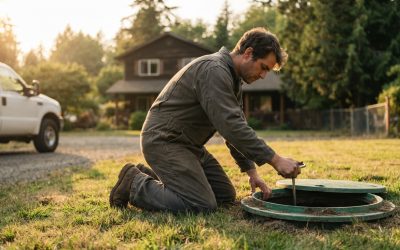
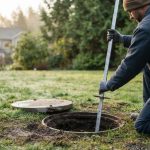
A repair that lasts starts with an accurate diagnosis. Technicians typically open the tank, check baffles and the outlet tee, and measure scum and sludge layers before recommending a course of action.
1. Inspect the tank interior, inlet and outlet baffles, and structural condition
2. Evaluate the drainfield for saturation, root intrusion, or damaged distribution lines
3. Pump the tank if sludge or scum levels are close to the outlet, since buildup can mask or worsen an existing problem
4. Repair or replace the specific failed component, whether that is a baffle, pipe, or pump
5. Document findings so the homeowner has a maintenance record going forward
Skipping steps, particularly the diagnostic inspection, often leads to repeat service calls for the same underlying issue.
Comparing Service Approaches
Not every septic provider structures their repair process the same way. The table below outlines how a maintenance-first approach compares to a reactive, repair-only approach.
|
Approach |
Typical Trigger |
Long-Term Outcome |
|
Maintenance-first |
Scheduled inspection or pumping interval |
Fewer emergency calls, lower lifetime cost |
|
Reactive repair only |
System already backing up or failing |
Higher risk of repeat failures, higher cost per visit |
|
Partial fix (symptom only) |
Visible issue like odor or slow drain |
Underlying cause often persists, leading to recurring problems |
Choosing a provider that defaults to the maintenance-first column tends to produce fewer surprises for homeowners over the life of the system.
Local Factors That Affect Septic Longevity
Systems in the South Sound region deal with high water tables and seasonal rainfall that can saturate drainfields faster than in drier climates. Grease trap buildup is also a recurring issue for commercial kitchens in the area, since blocked traps put extra strain on connected septic infrastructure.
EnviroTech Septic Solutions works with homeowners, restaurants, and commercial properties throughout the Olympia region, offering pumping, tank cleaning, repairs, installations, grease trap cleaning, inspections, and preventative maintenance. Property owners who pair routine pumping with prompt attention to early warning signs generally avoid the larger, more disruptive repairs that come from deferred maintenance.
Frequently Asked Questions
How often should a septic tank be pumped in Olympia? Most residential tanks need pumping every three to five years, though this varies based on household size, tank capacity, and water usage, according to EPA guidance.
What is the first sign a septic system needs repair? Slow drains, gurgling pipes, or standing water near the drainfield are typically the earliest indicators, and any of these signs warrant a professional inspection before the problem worsens.
Can grease trap issues affect a home or business’s septic system? Yes. Grease buildup restricts flow and adds strain to connected systems, which is why commercial kitchens benefit from routine grease trap cleaning alongside standard septic maintenance.
Is a septic inspection required when buying a home in Washington? Many local health departments require an inspection during real estate transactions, though requirements vary by county, so confirming with local regulations is recommended before closing.
Reliable septic repair depends on identifying the real cause of a problem and pairing that fix with a maintenance schedule that prevents recurrence. Homeowners and business owners in the Olympia area who want a clear assessment of their system’s condition can reach out to EnviroTech Septic Solutions to discuss inspection, pumping, or repair options suited to their property.